News
What will it take to scale regenerative agriculture?
On its face, it can seem like a panacea to our food system and climate crisis. McKinsey reports regenerative agriculture can sequester ~0.4-0.8 tons of CO2 per acre annually and potentially generate up to $80 billion in economic value for U.S. Corn Belt farmers over 10 years, driven by higher yields and cost savings.
Despite this data, there continues to be low adoption of these practices, and the existing solution set can only take us so far. Not all practices work in every region, but research shows that currently only 20% of cropland is planting cover crops and about 40% of cropland is still tilled conventionally. This is despite over $22 billion being allocated in the last two years alone by the U.S. government towards regenerative agriculture and related solutions.
Transitioning to regenerative farming isn’t just a choice; it comes with significant challenges. While farmers are deeply committed to their land’s health and sustainability, adopting these practices remains difficult for several key reasons.
This is where innovative and unique solutions such as Fractal are coming into play.
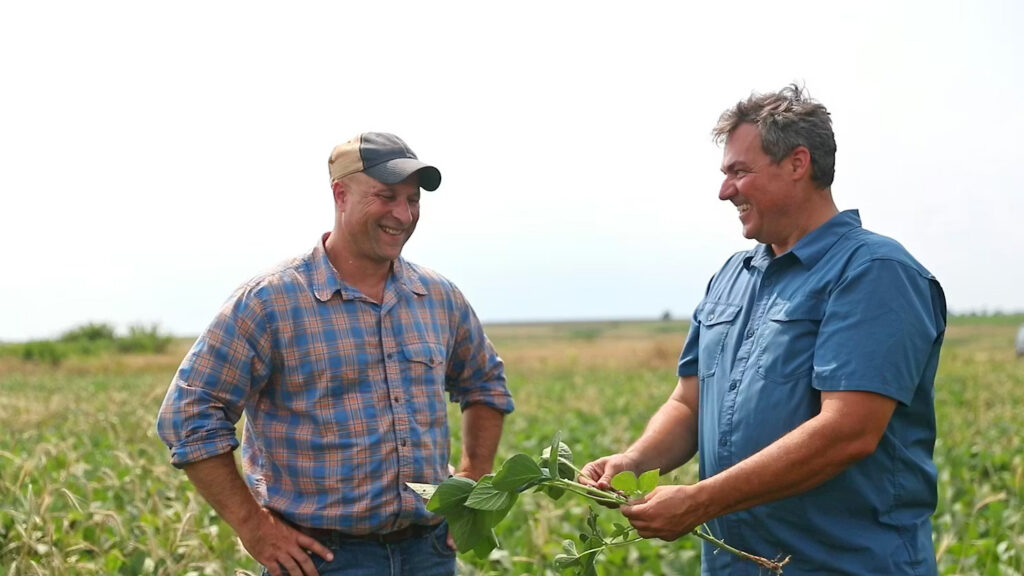
Regenerative farmer and Fractal customer Jesse Hough with Fractal Capital Advisor Brian Grundtner.
Founded in 2022, Fractal connects private capital with farmers, bridging a critical funding gap while giving investors access to U.S. farmland. Fractal rewards farmers for improving soil health by lowering their cost of capital. Healthier soil means more productive, valuable land—creating a financial incentive for regenerative practices that drive long-term resilience and profitability.
Co-founders Emma Fuller and Ben Gordon bring valuable experience to this mission. Emma is a farmer on Vashon Island in the Puget Sound near Seattle and helped build some of the first automated farmland valuation models at AcreValue.com, a data and insights platform for farmland buyers, sellers, and investors. Ben comes from a farming family with roots dating back to the 1980s and has a background in management consulting and finance. Before founding Fractal, Ben and Emma launched an agricultural carbon program, gaining deeper insights into the challenges farmers face when it comes to investing in their own soil.
“When you look at the adoption of regenerative agriculture broadly, there’s such a disparity in implementation that simply adding practices to these acres is hugely beneficial to the system,” said Emma Fuller, Co-founder, Fractal. “We’re focused on allowing farmers to address their own operational needs and constraints, along with the co-benefits like alternative weed suppression methods and erosion reduction. This approach is intentional because we want to provide an ‘on ramp’ for the majority of conventional acres today. If we don’t consider where farmers are starting from, we risk losing those acres entirely. This is one of the key gaps we identified from an impact perspective.”
Fractal puts farmers at the center of its approach, empowering them as stewards of the land. The company launched in August 2023 and started making passive, minority investments in land owned by farmers to provide them with the capital they need to grow their businesses. These investments allow investors to invest in farmland managed by the farmers, creating higher-quality investment assets that can yield greater returns.
To incentivize regenerative practices, Fractal offers discounts to farmers based on the number of regenerative practices adopted each year. The company values land by considering climate risk and soil health. As a result, farmers with healthier soils can expect higher valuations and lower capital costs. This provides a financial incentive for them to enhance their regenerative practices, driving positive impact for both the land and their businesses.
This approach to farmland valuation is different from traditional methods, which rely on static soil productivity indices that can be misleading. By those measures, Fractal partner John Maxwell’s 7,200-acre farm ranked in the bottom 20th percentile for quality. But those assessments failed to capture the impact of his long-term investment in soil health. Through Fractal’s transparent evaluation process, which accounts for actual field performance rather than outdated assumptions, it became clear that John’s regenerative practices had propelled his yields to the 90th percentile in the county. Recognizing this kind of performance is essential, not only for ensuring fair land valuations but also for supporting long-term farmland resilience and strong investor returns.
To learn more about the farmers Fractal partners with, take a look at their videos here.
“Farmers are the best active managers of the land, both financially and environmentally. We want to build tools that empower them to manage their land effectively, grow successful businesses, and deliver market or above-market returns for investors.”
— Ben Gordon, Co-founder and CEO, Fractal
From an investor’s standpoint, Fractal believes that its blend of strong science and close collaboration with farmers can deliver at or above market rate returns. The company’s differentiated approach presents an attractive opportunity for investors in three key ways:
“We see this as an opportunity to make a solid investment due to the win-win potential of regenerative agriculture for yields, cash flow, and finance, while also addressing environmental issues like (carbon) sequestration, emissions, water quality, and nutrient cycling,” said Ben Gordon, Co-founder and CEO, Fractal. “Farmers are the best active managers of the land, both financially and environmentally. We want to build tools that empower them to manage their land effectively, grow successful businesses, and deliver market or above-market returns for investors.”
To date, Fractal has raised more than $16 million and deployed $10 million worth of investments to leading farmers across the Midwest, covering ~5,000 acres. The farms Fractal has invested in are averaging three regenerative practices per year, per farm, per acre with farmers receiving discounts on their Fractal payments to share in the risk and upside of these practices. These practices are quickly improving land quality, with farms receiving Fractal’s support showing an average of 9% higher yields than the national average.
The company announced an expansion of their farmer offering in August 2024.
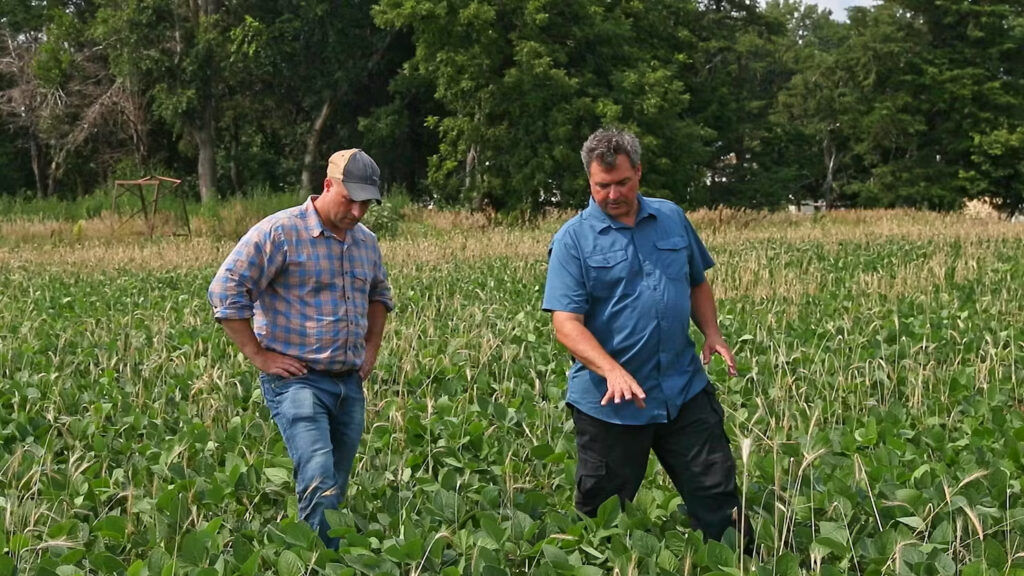
Jesse and Brian walking through a soybean field that was planted in a rye cover crop.
Builders Vision became an early investor in Fractal in 2023 because of its compelling vision and innovative approach to addressing challenges in scaling regenerative agriculture practices, a key focus of its agricultural strategy. The $3 million investment was made through its Builders Bridge portfolio, which is comprised of investments aimed at scaling solutions in oceans, food & agriculture, and energy.
As one of the first investors, Builders Vision conducted thorough due diligence to confirm that Fractal was a sound investment and was drawn to Fractal’s approach to lowering costs for farmers while producing higher yields for their crops.
“Fractal offers an exciting, scalable strategy that meets farmers where they are today. Developing innovative farming models is essential for the long-term resiliency of our farms, as soil loses nutrients and the planet warms,” said Sara Balawajder, Director of Investments, Builders Vision. “Driving sustained impact also involves helping farmers grow their businesses and creating attractive opportunities for investors. Fractal provides immediate solutions that address these existing challenges, helping to support farms and engage investors across the country.”
Looking ahead, Fractal continues to expand its network of investors while deploying capital to support farmers across the Midwest. They remain focused on validating their theory of change by helping early adopters scale and new adopters implement their first regenerative practices, aiming for one practice per field per year.
“The goal here is to show farmers and investors that this model is scalable in every sense of the word,” said Gordon. “For investors, both those focused on returns and impact, this model shows we are able to rapidly move all row crop acres along the adoption spectrum. For farmers, we want to show that it does not matter where they start, and that continuing to add regenerative practices can pay dividends for their land.”
“Driving sustained impact also involves helping farmers grow their businesses and creating attractive opportunities for investors. Fractal provides immediate solutions that address these existing challenges, helping to support farms and engage investors across the country.”
— Sara Balawajder, Director of Investments, Builders Vision