Energy
Heavy industries, from steel to cement to chemicals, are among the hardest to decarbonize. But as policy and economics increasingly align, modernizing these sectors can unlock trillions in value. The technology is advancing. The real challenge is building markets that give producers, buyers and investors the confidence to bring solutions to scale.
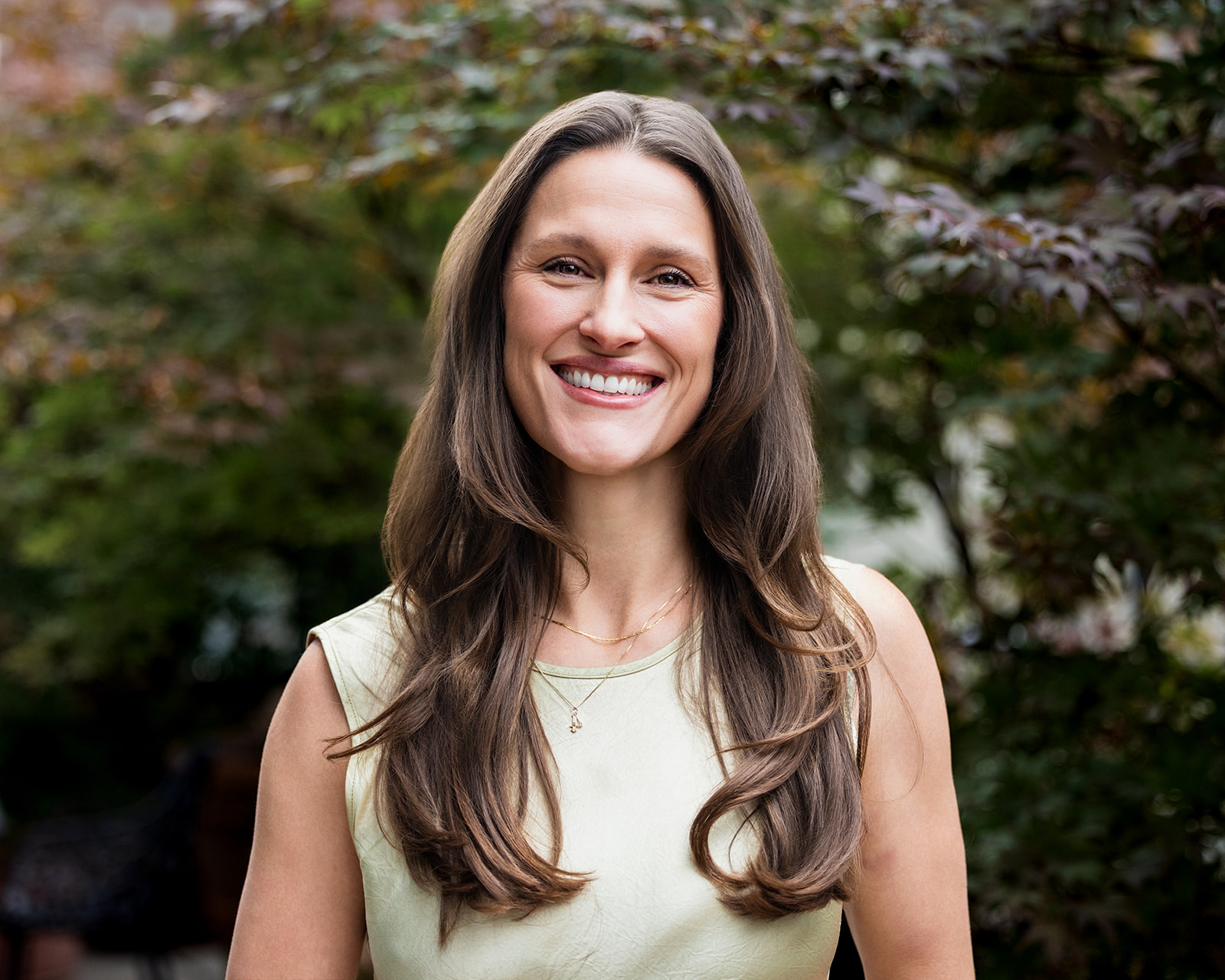
It’s a challenge Maddi Reeves is focused on as a Director on Builders Vision’s Philanthropy team focused on energy and industrial decarbonization.
We sat down with Maddi to talk about the role philanthropy can play in industrial decarbonization, how that’s coming to life through Builders Vision’s work on green cement and where she’s looking next.
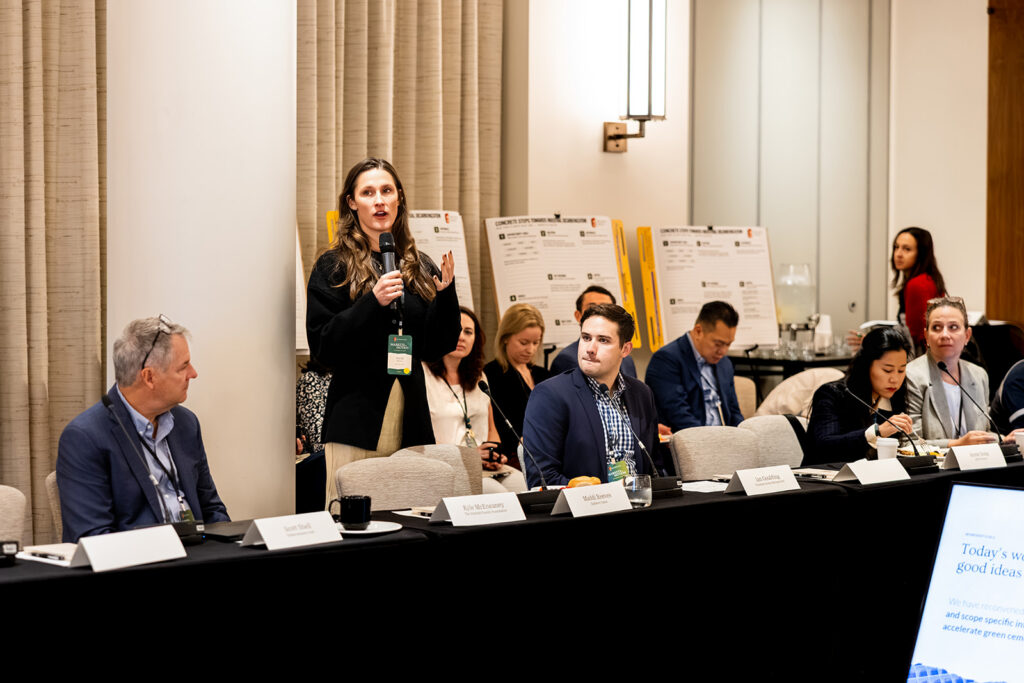
Maddi Reeves leads a Green Cement Workshop at 2026 New York Climate Week
Before joining Builders Vision, I served as Deputy Chief Sustainability Officer at the White House during the Biden-Harris Administration, and before that I worked on clean energy and supply chain initiatives at both the White House and the State Department. That meant working on some of the biggest public investments in clean energy this country has ever made, and learning in real time what it takes to translate policies into real-world projects. Earlier in my career, I worked in philanthropy at the Gates Foundation and in venture at DBL Partners.
So I’ve worked across nearly every part of the capital spectrum, and I’ve seen what becomes possible when all of those levers pull in the same direction. That’s what excites me about Builders Vision Philanthropy. We get to ask a broader question than most: not just “What should we fund?” but “What does this market need to grow, and what kind of capital fits that need right now?”
This strategy builds on work already happening across Builders Vision. Our investment team was already active in industrial decarbonization, so we worked together to identify subsectors where we had experience and interest, where solutions exist but haven’t yet reached market scale and where additional philanthropic dollars could make the biggest difference.
We evaluated a number of opportunities, and heavy industry kept rising to the top. It accounts for a huge share of the emissions we haven’t yet solved for, and has historically attracted relatively little philanthropic and venture capital. It’s also a space where the technologies already exist and could scale with targeted support, which means we actually have an opportunity to see tangible progress.
You may not have spent much time thinking about cement, but it’s in nearly everything we build: buildings, roads, bridges, you name it. It’s a nearly $400 billion global market and accounts for about 8% of global emissions. Yet cement and concrete have attracted 1% of climate tech venture capital over the past five years, with all industrial sectors receiving just $130 million in philanthropic capital.
What makes it a near-term priority is that many of the technologies are already here. Lower-carbon cement is available today, and with infrastructure demand growing, the decisions being made now could shape emissions for decades. The question is how fast these solutions go from available to scalable, and that is an exciting place for philanthropy to step in.
Philanthropy is one of the best tools we have for holding risk and urgency at once. There’s a lot of innovation in this space, but some of the biggest barriers aren’t about creating the technology. They’re about creating the conditions for adoption. That means supporting a market through its earlier, less proven stages: bringing buyers together to create durable demand signals, testing products in real-world applications, advancing policy and regulatory progress and developing financial and insurance tools to help first-of-a-kind projects succeed.
These are critical pieces of market infrastructure, but they’re hard to fund through traditional investment. They’re risky, and the benefits are shared across an industry rather than captured by a single company. That’s where philanthropy comes in, with patient, flexible capital, including catalytic or first-loss capital that absorbs risks others aren’t ready to assume.
We’re in close, constant communication. We share updates on current and prospective partners and frequently evaluate opportunities together, which helps both teams understand what’s happening across the market and where additional support could make a difference. We also engage stakeholders across the value chain together, bringing investors, suppliers, buyers and policymakers into the same room to move from conversation to action, including through workshops at Decarb Connect and New York Climate Week this year.
We each bring different tools to the same challenge. Working together gives us a fuller picture of what’s needed and where each form of capital can be most effective.
There are so many! I’d highlight two projects. First is our support of Elemental Impact’s Data Center Innovation Initiative that was announced earlier this year. It’s bringing together four hyperscalers to test emerging energy and materials technologies in real-world data center projects. This streamlines and accelerates the adoption process for new technologies while generating the proof points buyers need to scale these technologies faster. With data centers going up as fast as they are, that’s a direct line to the infrastructure being built today.
Another is the Aggregate Fund, which Renaissance Philanthropy launched at New York Climate Week this year with anchor grant funding from Builders Vision Philanthropy. The fund aims to help green cement and concrete reach commercial scale by addressing barriers across the value chain, from codes and standards to buyer demand and performance testing. I’m really excited to work with Renaissance to bring other funders alongside us and help move the market forward.
For green cement, success means lower-carbon products becoming a practical, competitive choice for producers and buyers, and eventually standard industry practice rather than the exception. When that happens, investors will be coming in on their own, and philanthropy will have done its job.
Beyond cement, we’re interested in applying this approach to other hard-to-abate sectors, like steel and chemicals. Each has its own challenges, but the question is the same: where can philanthropy help solve market barriers that hold promising solutions back from scaling? That’s what we’ll be digging into next, alongside our investment team and partners.
More broadly, I hope to see more funders treat philanthropy not just as a giving vehicle, but as a tool that can move markets. If you’re doing this work or want to learn more, we’d love to hear from you.
Follow us on LinkedIn and stay tuned for more insights from our partners, convenings and work.